The short version
- We buy warehouses, plants, flex buildings, truck terminals and other industrial property anywhere in Philadelphia, as-is, with no commission or fees from us.
- The realty transfer tax is 4.578%: 3.578% to the City and 1% to the state. The City says buyer and seller usually split it evenly.
- State law requires a Property Sales Certification from Licenses and Inspections (L&I) to sell any property in Philadelphia. It costs $139, takes about five business days and comes from City records, not an inspection.
- A commercial building vacant more than three months needs a Vacant Commercial Property License and a bond of $50,000 to $500,000, depending on its size.
- In the third quarter of 2026, Cushman & Wakefield counted 13.0% of the city's tracked industrial space vacant, with 1.4 million square feet under construction.
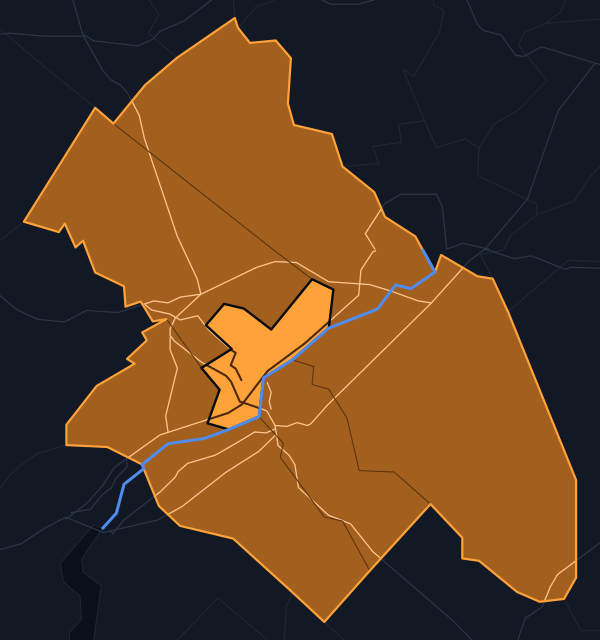
Direct Warehouse Buyers buys industrial buildings across Philadelphia, from Port Richmond and Northeast Philadelphia to Southwest Philadelphia. We're part of a family-owned business that has been operating for over 15 years. We buy as-is, through our own company, so you don't list the building, fix it up or pay a commission.
Selling in Philadelphia comes with its own rules. They include a sales certificate from Licenses and Inspections, a license for vacant buildings, a 4.578% transfer tax and a zoning code with six industrial districts.
Philadelphia at a glance
- Industrial space tracked
- 28.9 million sq ft, 13.0% vacant (Q3 2026)Source: Cushman & Wakefield, Q3 2026
- Warehouse asking rent
- $15.14 per sq ft a year, net, for warehouse and distribution space (Q3 2026)Source: Cushman & Wakefield, Q3 2026
- Transfer tax
- 4.578%: 3.578% City and 1% state, since July 1, 2025Source: City of Philadelphia, checked October 2026
- Real estate tax
- 1.3998% of assessed value: 0.6159% City and 0.7839% School District, unchanged since 2016Source: City of Philadelphia, checked October 2026
- To sell
- A Property Sales Certification from L&I: $139, about five business daysSource: City of Philadelphia, checked October 2026
- Industrial zoning
- I-1, I-2, I-3 and I-P, plus the ICMX and IRMX mixed-use districtsSource: Philadelphia Zoning Code, checked October 2026
- Main highways
- I-95, I-76 (the Schuylkill Expressway), I-676 and US 1 (Roosevelt Boulevard), with four Delaware River road bridges to New JerseySources: DRPA and Wikipedia, checked October 2026
- Freight centers
- 8 named by the region's planning commission, including the port complexes in South Philadelphia and at Tioga and both airportsSource: DVRPC, 2025
Do you buy warehouses and industrial buildings in Philadelphia?
Yes, anywhere in the city: a multi-story factory in Kensington, a warehouse in Port Richmond or Bridesburg, a plant in Hunting Park or a truck terminal in Southwest Philadelphia. Direct Warehouse Buyers buys as-is, in any size or condition, whether the building is vacant, leased or still in use, and an environmental history doesn't rule it out.
The market prices different kinds of industrial space very differently. Across the Philadelphia region in the third quarter of 2026, Cushman & Wakefield's average asking rent for manufacturing space was $9.52 per square foot a year, net. Warehouse and distribution space was $12.97. If your building is an older plant, we want to see it. See what we buy.
How is Philadelphia's industrial market doing in 2026?
In the third quarter of 2026, Cushman & Wakefield counted 13.0% of Philadelphia's 28.9 million tracked square feet vacant. Occupied space rose 1.2 million square feet in 2026 through September, and 1.4 million square feet was under construction. Its report says Philadelphia County accounted for more than 30% of the 2.7 million square feet completed across the region in 2026 through September.
| Measure | Philadelphia County |
|---|---|
| Industrial space tracked | 28,862,095 sq ft |
| Vacant | 3,757,048 sq ft (13.0%) |
| Net absorption (change in occupied space), 2026 through September | +1,206,134 sq ft |
| Leasing, 2026 through September | 1,424,172 sq ft |
| Under construction | 1,400,000 sq ft |
| Completed, 2026 through September | 830,824 sq ft |
| Warehouse and distribution asking rent | $15.14 per sq ft |
Most of the 830,824 square feet completed in the city in 2026 through September is one building: Building 2 at 3144 West Passyunk Avenue, 727,272 square feet. Cushman & Wakefield lists it as speculative (built without a signed tenant) and developed by Hilco Redevelopment. In the second quarter, the firm's key leases included Mitsubishi Electric's new lease of 489,701 square feet at 2951 Orthodox Street, Building 2.
This is a net asking rent per square foot per year: the landlord's opening number, before a lease is negotiated. On a net lease, the tenant also pays some or all of the property taxes, insurance and upkeep. Neither the rent nor the vacancy rate prices your building.
What does it cost to sell an industrial building in Philadelphia?
Philadelphia's realty transfer tax is 4.578% of the price, 3.578% to the City and 1% to the state. On a $2 million sale, that's $91,560. The City says buyer and seller usually split it evenly, though the law doesn't require that, and the City can collect all of it from either one.
The rest settles at closing, on the title company's statement:
- Your share of the transfer tax, as the agreement of sale sets it
- Your mortgage payoff and any liens or judgments
- Prorated real estate taxes, at 1.3998% of the assessed value a year, and on a leased building, prorated rent and tenant deposits
Every sale in the city also needs the $139 Property Sales Certification from L&I. Selling to us adds no commission and no fees. On a listed sale you'd also pay the commission in your listing agreement, which Sell Direct or List? compares line by line.
Our worked example of a $2,500,000 sale runs the 4.578% tax and a sample mortgage payoff, next to the same sale in the suburbs and in New Jersey.
What does Philadelphia require before you sell?
A Property Sales Certification from Licenses and Inspections. Pennsylvania law requires one to sell any real estate in Philadelphia, commercial or residential. It costs $139, takes about five business days, and states the property's zoning, its last established use and any uncorrected violations. It's based on City records, not an inspection.
L&I's bulletin on the certificate says it "does not certify compliance with the Philadelphia Building Construction and Occupancy Code." It tells the buyer what the City's records show, and that's what our review starts from too.
Two more City rules matter at a sale:
- New owner, same use: a new certificate of occupancy isn't required when ownership or tenancy changes, as long as the approved use stays the same.
- A new use: changing a property's use takes a zoning permit. The City's own example is converting a warehouse into artist studios. For uses other than one- and two-family homes, the filing fee is $100, applied toward the permit's final cost, and the permit fee is $189 for each permitted use.
Open violations don't rule a building out. Tell us what the City has cited, and we'll price it in.
What if my Philadelphia building is vacant?
Once a commercial property has been vacant more than three months, with no construction under way or scheduled, the City of Philadelphia requires a Vacant Commercial Property License. It costs $202 a year, plus a bond sized to the building, from $50,000 to $500,000, or a letter of credit instead. We buy vacant buildings as they are, boarded up or not.
The bond depends on the building's total square footage, not counting the basement:
- Under 50,000 square feet: a $50,000 bond
- 50,000 to 200,000 square feet: a $100,000 bond
- Over 200,000 square feet: a $500,000 bond
The bond covers the City's potential cost of correcting code violations or dealing with unsafe conditions, and a letter of credit can stand in for it.
Boarded openings bring a separate rule. Under the Property Maintenance Code, section PM-901.2, the owner of a building missing framed, glazed windows or doors must install real ones; boards or masonry don't count. It applies on a block face where 80% or more of the buildings are occupied. On any other block, it applies once the code official determines that the missing windows or doors have a significant adverse influence on the community. The official must also give the owner 30 days' notice. In 2018, in a case over a vacant former brewery, the Pennsylvania Supreme Court vacated lower-court rulings that had held an earlier version of the rule unconstitutional. It sent the case back to the trial court.
The owner of a vacant, commercially or industrially zoned property with a building over 5,000 square feet must register it with the city right away. A new owner must register it within five days of taking title. The owner then inspects it within 15 days and at least every two weeks after that, which is part of what we plan for when we buy.
Add the real estate tax, and an empty building costs money every month it waits. If you're deciding whether to keep paying to hold it, a written offer gives you a number to compare with those costs. Our vacant building page covers insurance limits and the other costs of holding an empty building.
How does zoning affect selling an industrial property in Philadelphia?
Zoning sets what a buyer can do with the building, which shapes who will pay the most for it. Philadelphia's zoning code has six industrial districts: I-1 Light, I-2 Medium, I-3 Heavy and I-P Port Industrial, plus the ICMX and IRMX mixed-use districts. Philadelphia's Atlas tool shows your parcel's zoning, permits and violations.
| District | Primarily intended for |
|---|---|
| I-1 Light Industrial | Low-impact uses such as light industrial, assembly, fabrication, offices, research and development, and local distribution |
| I-2 Medium Industrial | Light and moderate-impact uses such as manufacturing, distribution, processing and industrial parks, which may generate noise, odor, vibration, after-hours activity or traffic |
| I-3 Heavy Industrial | Intensive, high-impact uses, including extractive industries, petroleum processing, storage, terminals, tanks and pipes |
| I-P Port Industrial | Marine-related uses such as docks, wharves, piers and transit sheds used to move, store and do incidental processing of cargo to and from ships |
| ICMX Industrial Commercial Mixed-Use | Commercial and low-impact industrial uses |
| IRMX Industrial Residential Mixed-Use | A mix of very low-impact industrial uses, including artists and artisan industrial, with residential and neighborhood commercial uses |
Zoning can also change. In June 2026, the City Planning Commission voted in favor of bills that would remap industrial parcels. One would move land from ICMX to CMX-3, a commercial mixed-use district. Another, approved with amendments, would rezone 2730 Frankford Avenue from I-2 to RM-1, a residential multi-family district. If your parcel's zoning has changed, or a change is proposed, tell us. It's part of what we price. For terminals, storage yards and truck parking, our page on truck terminals and yards shows which districts allow each use.
Where are Philadelphia's industrial areas?
The 2010 industrial land study prepared for PIDC, the Philadelphia Industrial Development Corporation, surveyed 15 industrial districts, from Southwest and Grays Ferry to the Northeast and Roxborough. The Delaware Valley Regional Planning Commission (DVRPC) adds eight freight centers. They are Bridesburg, Tacony, Hunting Park, Girard Point, the Northeast Philadelphia and Philadelphia International airports, and the port complexes in South Philadelphia and at Tioga.
DVRPC sorts its 2025 centers by the kind of industry each holds:
- International gateway (a major port or airport): South Philadelphia Port Complex, Tioga Port Complex and Philadelphia International Airport
- Heavy industrial: Philadelphia-Bridesburg
- Distribution and logistics: Philadelphia-Girard Point and Northeast Philadelphia Airport
- Local manufacturing and distribution (smaller, general-purpose buildings used by small businesses): Philadelphia-Hunting Park and Philadelphia-Tacony
The port, the Navy Yard and the Bellwether District
PhilaPort's public terminals include the Packer Avenue Marine Terminal (160 acres) and the Tioga Marine Terminal (116 acres). They also include Piers 78, 80, 82 and 84, Piers 122 and 124 and the SouthPort Auto Terminal. In September 2025, PhilaPort said it had bought the 152-acre Mustin Yard from Norfolk Southern, land that was originally part of the Navy Yard.
PIDC manages and develops the Navy Yard, a 1,200-acre campus acquired from the federal government in 2000. Its 2025 annual review counts more than 150 companies and 16,000 employees there, with the campus 96% occupied. Along the Schuylkill, the former Philadelphia Energy Solutions refinery is being rebuilt as the Bellwether District, about 1,300 acres in South and Southwest Philadelphia. DrinkPAK was announced as its first tenant, WHYY reported, and the Governor's office says TerraPower Isotopes will lease a 250,000-square-foot building built for it there.
Highways and bridges
I-95 runs along the Delaware River through the whole city, from the airport and South Philadelphia past Center City, Port Richmond, Bridesburg and Tacony into Bensalem. I-76 follows the Schuylkill Expressway through the city and crosses to New Jersey on the Walt Whitman Bridge. US 1, Roosevelt Boulevard, runs from I-76 through Hunting Park to Northeast Philadelphia and the Bucks County line. Three Delaware River Port Authority bridges reach Camden County. The Ben Franklin Bridge runs from Center City to Camden, the Walt Whitman Bridge from South Philadelphia to Gloucester City and the Betsy Ross Bridge from Northeast Philadelphia to Pennsauken. The Tacony-Palmyra Bridge links Tacony with Palmyra in Burlington County.
What records will a buyer check on a Philadelphia property?
Mostly public ones. Philadelphia's Atlas tool shows a property's licenses, permits, violations, zoning history and assessments, plus its deed and mortgage history. The Office of Property Assessment's site, property.phila.gov, shows ownership, value and physical characteristics. We look at the same records before we make an offer.
A few more things a buyer weighs here:
- The assessment. OPA values commercial property from recent sales, operating costs, income, or the cost of land and construction. It plans citywide revaluations every other year. It skipped tax year 2026 and began mailing tax year 2027 valuation notices the week of June 30, 2026.
- The stormwater charge. The Philadelphia Water Department bills non-residential property for stormwater by the parcel's gross area and its impervious area, such as roofs and paving. Credits can lower the charge, and stormwater grants for non-residential owners, awarded with PIDC, can pay for retrofit projects. Our truck terminals page estimates the charge for a paved one-acre lot.
- Open violations and licenses. The Property Sales Certification lists uncorrected violations, and a vacant building's license status shows up in the City's records.
Can I sell a Philadelphia building with environmental problems?
Yes. Tanks in the ground, past spills and open cleanup cases all go into our price. Pennsylvania's Act 2 Land Recycling Program applies in Philadelphia as it does statewide. If any part of your site went through it, bring the reports and any letters from the state's Department of Environmental Protection.
Industrial land with a past gets reused here, from the Navy Yard to the former refinery that is becoming the Bellwether District. Our FAQ covers environmental questions in more depth, and How It Works explains how we handle them in an offer. Our page on selling with environmental problems walks through Act 2.
What should I have ready to sell a warehouse in Philadelphia?
The address is enough to start, and the OPA account number helps. None of the rest has to be complete, but each piece helps us firm up an offer sooner:
- The Property Sales Certification, if you've already ordered it
- Any L&I violation notices, and the Vacant Commercial Property License if the building is empty
- Leases or a rent roll, if tenants are in place
- Environmental reports and any letters from the DEP
Atlas and property.phila.gov fill in much of the rest, and we check both. How It Works covers each step from the first call to closing, and our seller's guide lists the documents any buyer will ask for, and why.
Neighborhoods and industrial districts we serve in Philadelphia
We buy warehouses, factories, flex buildings and truck terminals in every part of the city. That runs from Port Richmond, Kensington and Bridesburg to Hunting Park, Nicetown, Tioga, Frankford, Tacony, Holmesburg, Grays Ferry, Eastwick and South Philadelphia.
The City Planning Commission's 18 planning districts
- Central
- Central Northeast
- Lower Far Northeast
- Lower North
- Lower Northeast
- Lower Northwest
- Lower South
- Lower Southwest
- North
- North Delaware
- River Wards
- South
- University Southwest
- Upper Far Northeast
- Upper North
- Upper Northwest
- West
- West Park
The 15 industrial districts in PIDC's 2010 study
- American Street
- Aramingo
- Callowhill
- Grays Ferry
- Hunting Park East
- Hunting Park West
- Lawncrest
- Lower North Delaware
- Northeast
- Northern Liberties
- Parkside
- Roxborough
- South Delaware
- Southwest
- Upper North Delaware
Other places we buy
Beyond the city line, we buy in Bucks County, Montgomery County and Delaware County, and across the river in Camden County, Burlington County and Gloucester County, New Jersey. See the map of all seven counties.
Sources
- City of Philadelphia: Realty transfer tax and July 2025 rate notice
- City of Philadelphia: Get a Property Sales Certification and L&I Code Bulletin BU-2001
- L&I: Certificate of occupancy (May 2025) and zoning permit to change the use of a property
- City of Philadelphia: Vacant Commercial Property License
- Philadelphia Property Maintenance Code: PM-901 (vacant properties and blighting problems), PM-202 (definitions) and PM-902 (large vacant commercial or industrial properties)
- Supreme Court of Pennsylvania: Rufo v. Board of License and Inspection Review (September 13, 2018)
- City of Philadelphia: Real estate tax rate for 2027 (July 2026)
- Office of Property Assessment: Property assessments and FY26 budget testimony
- City of Philadelphia: Search for property history (Atlas)
- Philadelphia Water Department: Non-residential stormwater billing, credits and grants
- Philadelphia Zoning Code § 14-403: industrial districts
- City Planning Commission: Minutes, June 4, 2026
- City Planning Commission: Planning districts and DVRPC map of the planning districts
- PIDC: An Industrial Market and Land Use Strategy for the City of Philadelphia (September 2010) and its executive summary
- DVRPC: Freight Centers, 2025 Update Process (June 2025)
- PhilaPort: Terminal operators, Packer Avenue Marine Terminal, Tioga Marine Terminal and Mustin Yard purchase (September 2025)
- The Navy Yard: Who we are and PIDC 2025 annual review
- Pennsylvania DEP: Land Recycling Program (Act 2)
- Office of the Governor: TerraPower investment in the Bellwether District (March 2026) and WHYY: DrinkPAK, the Bellwether District's first tenant (December 2025)
- Cushman & Wakefield: Philadelphia Industrial MarketBeat, Q3 2026 and Q2 2026
- DRPA: Ben Franklin Bridge, Walt Whitman Bridge, Betsy Ross Bridge and history
- Wikipedia: Interstate 95 in Pennsylvania, Schuylkill Expressway, Interstate 676, Roosevelt Boulevard and Tacony-Palmyra Bridge
The rates, rules and market figures on this page come from the sources listed here, last checked in October 2026.
