The short version
- We're part of a family-owned business that has been operating for over 15 years.
- We buy warehouse and industrial property ourselves, in seven counties on both sides of the Delaware River.
- We charge no commission or fees, and proof of funds is available on request.
- We buy as-is, through our own company, which closes as the buyer.
Who we are
Direct Warehouse Buyers is part of a family-owned business that has been operating for over 15 years. It's the name we use for one kind of buying: warehouses, flex buildings, plants, truck terminals and other industrial property in Philadelphia, its Pennsylvania suburbs and South Jersey.
When you contact us, you deal with our team directly. There's no middleman between you and the buyer, because we are the buyer: the offer you get is ours, and so is the closing.
Why we buy warehouses here
Small buildings are hard to replace
In the third quarter of 2026, CBRE counted 5.0% vacancy in buildings under 50,000 square feet across its Philadelphia market, against 18.8% for buildings of 500,000 to 749,999 square feet. CBRE's January 2026 outlook said construction costs generally ruled out new buildings under 100,000 square feet, so this region's smaller buildings are mostly the ones already standing.
Two states, two rulebooks
Half of the industrial space Cushman & Wakefield tracks in our seven counties sits in Burlington, Camden and Gloucester counties, under New Jersey law. A buyer who works here has to know New Jersey's bulk sale notice and the Industrial Site Recovery Act as well as Pennsylvania's transfer taxes and Act 2 program. That's why this site covers both states' rules.
Business owners skew older
In the Census Bureau's 2019 Annual Business Survey (2018 data), 51% of responding owners of U.S. employer businesses were 55 or older. When an owner retires or sells the company, the building that housed it may need to be sold too. Our comparison of selling direct and listing covers what that decision involves.
How we work
We're the buyer
We buy through our own company, which signs the purchase agreement and closes as the buyer. If you want to see proof of funds before you spend time with us, ask, and we'll provide it.
Offers in writing, in plain terms
Our offers spell out the price, the terms, the proposed closing date and who pays which closing costs. We charge no commission and no fees. Transfer taxes are handled the usual way for your property (in New Jersey, the seller pays the Realty Transfer Fee by law). If we're covering more of the costs on your deal, the offer says so.
Honest about listing
Some buildings will bring more on the open market. If yours is one of them, we'll tell you, and our comparison of selling direct and listing explains how to judge it yourself.
As-is means as-is
We price the building in its current condition, so nothing has to be fixed before you sell. You don't have to empty it first unless that's part of a plan you want. The purchase agreement spells out when the price can be revisited. If due diligence turns up something material that neither of us knew about, we'll show you what we found and talk it through.
Complicated is fine
Tenants in place, environmental history, inherited or estate property, partners who disagree and older buildings with awkward layouts don't rule a property out. We look at those deals instead of passing on them.
Your timeline
We can't promise a closing in a set number of days. We work to the date you choose without pushing you to hurry. The required steps and the due diligence period in our offer set the minimum pace. How It Works explains those steps.
What we buy, and where
We buy warehouse and distribution buildings, flex and small-bay buildings, manufacturing plants, truck terminals and yards, cold storage, leased and multi-tenant buildings, older multi-story buildings and property with environmental issues. Any size, any condition, occupied or vacant. See what we buy, type by type.
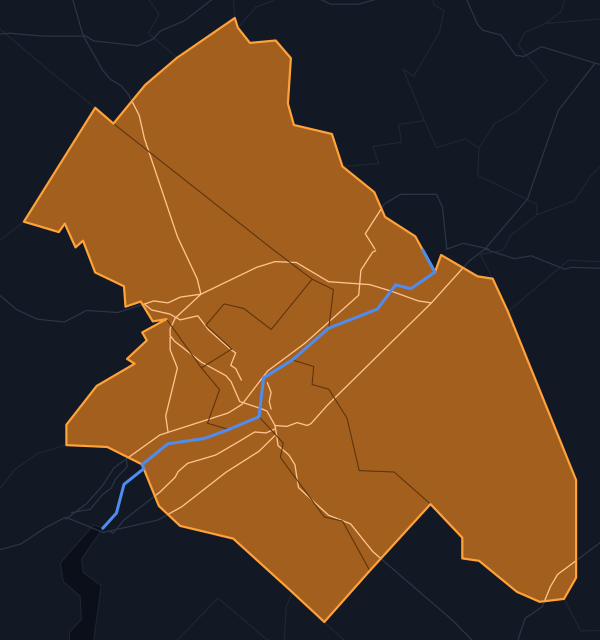
Our area covers Philadelphia, its three Pennsylvania suburban counties and three South Jersey counties, which together hold 265 municipalities. In Pennsylvania that means Philadelphia, Bucks County, Montgomery County and Delaware County. In New Jersey it means Camden County (Gloucester City included), Burlington County and Gloucester County. See the map and county list under where we buy.
Who we work with
- Owners and owner-users selling a building they own or operate from, including through a sale-leaseback.
- Executors, trustees and heirs settling an estate that includes industrial property.
- Brokers and advisors, including CPAs, wealth managers, business brokers and lenders whose clients own industrial real estate. See For Brokers and Advisors.
- Wholesalers with a warehouse or industrial property under contract in our area. See For Wholesalers.
What we won't do
We can't give you a price before we've seen the building, and we don't publish a formula for what we pay. We won't invent urgency to rush a decision. When a property is outside our area or isn't industrial, we'll tell you that too.
How to check us out
Ask for proof of funds. Ask how we would structure your sale, who pays which costs and what our due diligence involves. Read our answers to 39 common questions, including the environmental and tax rules that apply in each state. Good questions before an offer save time for both of us.
Sources
- CBRE: Philadelphia Industrial Figures, Q3 2026 (CBRE's Philadelphia market includes South Jersey and Northern Delaware)
- CBRE: 2026 Philadelphia Real Estate Market Outlook (January 2026)
- Cushman & Wakefield: Philadelphia Industrial MarketBeat, Q3 2026
- U.S. Census Bureau: Ages of business owners
- NJ Division of Taxation: Realty Transfer Fee
