The short version
- We're a direct buyer of warehouse and industrial property in seven counties of Pennsylvania and New Jersey, and we charge no commission and no fees.
- We buy as-is, including buildings with tenants, deferred maintenance or environmental issues.
- We can't promise a set number of days to close. In New Jersey, a 10-business-day state tax notice applies to business property, and ISRA can add steps.
- Philadelphia's transfer tax is 4.578%, usually split. In New Jersey the seller pays the Realty Transfer Fee, plus 1% to 3.5% on commercial-class sales over $1 million.
About us
Who is Direct Warehouse Buyers?
Direct Warehouse Buyers is a direct buyer of warehouse and industrial property in Philadelphia, Bucks, Montgomery and Delaware counties in Pennsylvania and Camden, Burlington and Gloucester counties in New Jersey. It buys as-is, through its own company, with no commission, and it's part of a family-owned business that has been operating for over 15 years. More on our About page.
Are you the actual buyer?
Yes. We buy through our own company, which signs the purchase agreement and closes as the buyer, so there's no middleman between you and the sale. You deal with us from the first call through closing.
Can you show proof of funds?
Yes. If you'd like to see proof of funds before you sign anything, ask, and we'll provide it. It's a fair thing to ask any direct buyer, and our comparison page lists other questions worth asking.
What kinds of property do you buy?
We buy warehouse and distribution buildings, flex and small-bay buildings, manufacturing plants, truck terminals and yards, cold storage, leased and multi-tenant buildings, older multi-story buildings and property with environmental issues. Occupied or vacant, in any condition. Our page on each property type we buy covers what buyers check in each.
Is there a minimum or maximum building size?
No. We look at single-unit buildings, large distribution buildings and everything between, along with truck yards and outdoor storage lots.
The process
How does selling to you work?
You send the basics by form, phone or text. We review the property and walk it with you, then give you a written offer with the price, terms, a proposed closing date and who pays which costs. If you accept, we both sign a purchase agreement and complete due diligence. Once its conditions are met, we close through a title company on the date you choose, within the required steps. How It Works covers each step.
What do you need from me to make an offer?
The address, the building size and how it's used today. These help us move faster if you have them:
- The OPA account number (Philadelphia) or block and lot (New Jersey)
- Leases or a rent roll
- Past environmental reports and any letters from the New Jersey Department of Environmental Protection (NJDEP) or Pennsylvania's Department of Environmental Protection (DEP)
- A recent tax bill
Will you sign a nondisclosure agreement?
Yes. If you'd like one, we sign a nondisclosure agreement before you share leases, financials or other details.
Will my tenants, employees or customers find out?
Not from us. There's no sign, no listing and no marketing. We schedule visits with you and coordinate with you before contacting anyone else, including tenants.
Do I need to repair or clean out the building?
No. We buy as-is and price the building in its current condition, from the roof and paving to fire systems and code items. If equipment will stay with the building, tell us early so the offer can say what's included.
Can I sell a building with code violations or open permits?
Yes. We buy as-is, including buildings with open violations or permits, so tell us what you know. Some Pennsylvania townships and boroughs inspect before a sale. Under Act 133 of 2016, violations found then mean a temporary certificate, and the buyer has 12 months after the purchase to fix them. If a violation makes the building unfit for human habitation, the certificate allows repairs but no occupancy until it's fixed.
How do you decide what to offer?
We look at the building, the land, the leases, the condition and the cost of any work it needs, then compare that with what similar buildings sell and rent for. For a leased building, the rent and lease terms weigh heavily. We don't publish a formula, and we can't quote a price before we've seen the property. Our comparison with listing shows how to weigh an offer against the open market.
Can the price change after due diligence?
Our offer prices the condition we've seen and what you've told us, and the purchase agreement spells out when the price can be revisited. If due diligence turns up something material that neither of us knew about, we'll show you what we found and talk it through before anything changes. Contamination in a new environmental report is one example.
Can I sell to you and keep operating in the building?
Yes, through a sale-leaseback. You sell the real estate and sign a lease to stay, and the lease terms are written into the deal.
Our guide to selling a warehouse walks through the whole process, from what buyers look at to the closing table, whoever you sell to.
Timing
How fast can you close?
We work to the date you choose, but we can't promise a set number of days. A few steps set the minimum pace: New Jersey's bulk sale notice, any ISRA filing, the due diligence period in our offer, title issues and, on leased buildings, tenant paperwork.
Can I choose a later closing date?
Yes. If you need time to move out, wind down operations or plan around a tax year, we set a later date in the agreement.
What is New Jersey's bulk sale notice?
When real estate used for business or income purposes is sold in New Jersey, the buyer files Form C-9600 to report the sale to the Division of Taxation. The Division must receive it with the signed contract at least 10 business days before closing. The Division responds within 10 business days of receiving it, with a reply such as a clearance letter, an escrow requirement or a request for missing returns.
A buyer who skips the notice can become liable for the seller's unpaid state taxes, which is why it's a standard step.
Can a sale to you be part of a 1031 exchange?
Yes. Tell us at the start so the closing date and documents fit your exchange timeline. In a deferred exchange, IRS rules give you 45 days after the closing to identify replacement property. You must receive it within 180 days or by your tax return's due date, including extensions, whichever comes first. Your qualified intermediary handles the exchange side.
Costs and taxes
Do you charge a commission or fees?
No. Direct Warehouse Buyers doesn't charge a commission, a listing fee or a processing fee. Transfer taxes and your own payoffs still settle at closing, and the title company's settlement statement shows each one.
How much is Philadelphia's transfer tax, and who pays it?
Philadelphia's realty transfer tax is 4.578% for commercial and residential property alike: 3.578% for the City plus 1% for the state, since July 1, 2025. The City says, "The tax is usually split evenly between the buyer and the seller, but this is not a legal requirement." The City can collect the full tax from either party.
On a $2,000,000 sale the total is $91,560, or $45,780 per side when it's split evenly. Our Philadelphia page covers the city's other rules for sellers.
What are the transfer taxes in Bucks, Montgomery and Delaware counties?
Bucks and Montgomery counties each list a 2% total realty transfer tax (1% state plus 1% local), and so does most of Delaware County. The Delaware County Recorder of Deeds lists higher totals in a few places:
- Radnor, Upper Darby and the City of Chester: 2.5%
- Upper Providence Township: 3%
Rates can vary by municipality, so the title company confirms the exact rate for your address. Our Bucks County, Montgomery County and Delaware County pages show each county's rates and township resale rules.
What does a seller pay in New Jersey?
By law, the seller pays New Jersey's Realty Transfer Fee, which the Division of Taxation charges per $500 of the price at rates that rise in steps with the price. On commercial-class (Class 4A) property sold for more than $1 million, the seller has also paid the Graduated Percent Fee on the full price since July 10, 2025:
- 1% over $1 million, up to $2 million
- 2% over $2 million, up to $2.5 million
- 2.5% over $2.5 million, up to $3 million
- 3% over $3 million, up to $3.5 million
- 3.5% over $3.5 million
Industrial-class (Class 4B) property isn't subject to it. The class on the municipal tax list is the one that counts, so it's worth checking early.
I live outside New Jersey. Is there an extra tax when I sell a building there?
There can be. If you sell as an individual, an estate or a trust and you don't live in New Jersey, the state collects an estimated income tax payment before or at closing. The payment is your gain times the state's top income tax rate (10.75% on its Form GIT/REP-1), but never less than 2% of the price, even with no gain.
Sellers that aren't individuals, estates or trusts are exempt, and so are some sales, such as one whose gain isn't recognized for federal tax purposes under a 1031 exchange. The title company confirms what applies to you.
Will I receive the full offer price at closing?
Not exactly. The price is what we pay. Your mortgage, any liens or back taxes, your share of transfer taxes and prorated taxes or rents are paid out of it at closing. The title company's settlement statement shows each item.
Will you pay any of my closing costs?
Sometimes. Our standard offer charges you no fees or commission and handles transfer taxes the usual way for your property. On some deals we cover more of the closing costs, and when we do, it's written into the offer.
Our guide to what selling really costs works these taxes and fees through one $2,500,000 sale, including what a seller nets.
Environmental questions
Do you buy buildings with environmental problems?
Yes. We look at the building anyway and price the work in. Underground tanks, past spills, contamination and open remediation cases are part of industrial property, and we work with you and your environmental professional on the state requirements.
What is ISRA?
ISRA is New Jersey's Industrial Site Recovery Act. It can apply when a covered industrial establishment closes operations or transfers ownership or operations, including a sale of the real property where it operates. The owner or operator must notify the New Jersey Department of Environmental Protection (NJDEP) within five days of the triggering event. For a sale, that means within five days after the sale agreement is signed.
A Licensed Site Remediation Professional (LSRP) then investigates the site and oversees any cleanup it needs, which NJDEP has required for notices filed since November 3, 2009. When that work is done, the LSRP issues a Response Action Outcome: a written determination that the site was remediated in line with all applicable laws and rules.
Does ISRA have to be finished before I can sell?
Not always. ISRA has to be addressed before closing. Even so, the sale can close once the owner or operator files a Remediation Certification backed by a Remediation Funding Source, and the cleanup continues afterward. Another party, such as the buyer, can agree to take on the cleanup, but if the work isn't done, the law still holds the owner or operator liable. Your environmental professional can explain what that means for your site.
Does ISRA apply when I sell my building in New Jersey?
It can. Selling the real property where a covered industrial establishment operates is an ISRA triggering event. A business is covered when all three of these are true:
- Its NAICS code, the federal code for its type of business, is listed in Appendix C of the ISRA rule
- It operated in New Jersey on or after December 31, 1983
- Its operations involved generating, manufacturing, refining, transporting, treating, storing, handling or disposing of hazardous substances or wastes
NJDEP stopped issuing applicability determinations on April 30, 2008, so owners and operators work it out with their own environmental consultants.
What is Pennsylvania's Act 2?
Act 2 created Pennsylvania's Land Recycling Program, a voluntary cleanup program run by the Department of Environmental Protection. It sets cleanup standards, and once DEP approves a final report showing a standard was met, the liability relief can pass to a later buyer. If your property went through Act 2, bring the reports.
Will there be a Phase I environmental report?
Expect one. A Phase I environmental site assessment follows ASTM E1527-21, the standard that EPA recognizes, and it is one of the requirements for federal buyer protections. For you, that means a site visit and a short interview about how the property has been used. If you have a Phase I from the past year, send it, because federal rules let an earlier inquiry be updated instead of redone.
Our ISRA guide for New Jersey sellers explains what triggers ISRA, the ways a sale can close before a cleanup is finished and what happens if ISRA is ignored.
Tenants and buildings
Can I sell with tenants in place?
Yes. We buy leased and partly leased buildings with the tenants in place, and the leases stay in force after the sale. How It Works explains how rent, security deposits and estoppel letters are handled at closing.
What if my building is vacant?
We buy vacant buildings. In Philadelphia, a commercial property vacant for more than three months, with no construction under way or scheduled, needs a Vacant Commercial Property License. It costs $202 a year plus a bond based on the building's size, not counting the basement:
- Under 50,000 square feet: $50,000
- 50,000 to 200,000 square feet: $100,000
- Over 200,000 square feet: $500,000
My building is old, small or hard to lease. Will you still look at it?
Yes. Low clear heights, few docks, multi-story layouts and dated systems are exactly the buildings we expect to see. Small buildings have had the lowest vacancy of any size range: CBRE counted 5.0% in buildings under 50,000 square feet across its Philadelphia market in the third quarter of 2026.
Do you buy truck yards and outdoor storage lots?
Working truck terminals, cross-docks, contractor yards and outdoor storage lots are all part of what we buy in our seven counties, with or without buildings on them. In Pennsylvania, we also buy industrial land. Our page on truck terminals and yards covers zoning, stormwater charges and fuel tanks.
Brokers, wholesalers and our area
Do you work with brokers?
Yes. If you represent an owner, tell us at the start. We handle compensation deal by deal and talk about it before you share the property's details. See For Brokers and Advisors.
Do you buy from wholesalers?
We look at warehouse and industrial properties that wholesalers have under contract in our seven counties. Send the details, and we'll tell you whether a deal fits. We can't promise to buy any particular property. See For Wholesalers.
Where exactly do you buy?
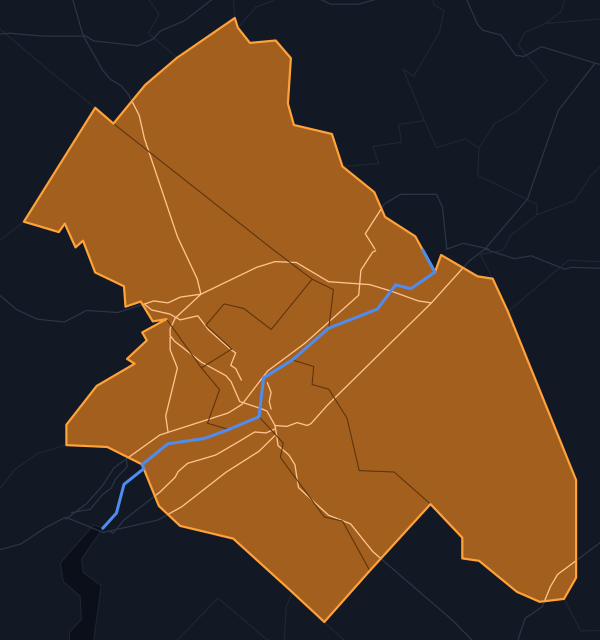
Direct Warehouse Buyers buys in Philadelphia, Bucks County, Montgomery County and Delaware County in Pennsylvania, and Camden County, Burlington County and Gloucester County in New Jersey. Gloucester City is part of Camden County, and Gloucester County is a separate county. Together that's 265 municipalities, counting Telford, which sits in both Bucks and Montgomery, only once. See the county map.
Do you buy outside those seven counties?
These seven counties are where we buy. If your property sits just outside them, ask anyway, and we'll tell you whether it fits.
Sources
- City of Philadelphia: Realty transfer tax
- City of Philadelphia: Transfer tax rate is now 4.578% (July 2025)
- Pennsylvania Department of Revenue: Realty transfer tax
- Delaware County Recorder of Deeds: Transfer taxes
- Bucks County: Transfer tax
- Montgomery County: Realty transfer tax
- NJ Division of Taxation: Realty Transfer Fee
- NJ Division of Taxation: Graduated Percent Fee notice
- NJ Division of Taxation: Graduated Percent Fee property classes
- NJ Division of Taxation: Nonresident sellers of real property
- NJ Division of Taxation: TB-57(R), real property sales by nonresidents (revised June 15, 2026)
- NJ Division of Taxation: Form GIT/REP-1, nonresident seller's tax declaration
- NJ Division of Taxation: Form GIT/REP-3, seller's residency certification and exemptions
- NJ Division of Taxation: Bulk sale FAQ
- IRS: Instructions for Form 8824, like-kind exchanges (2025)
- NJDEP: ISRA Remediation Certification
- NJDEP: ISRA applicability
- NJDEP: ISRA applicability service discontinued (April 30, 2008)
- Industrial Site Recovery Act (statute text)
- N.J.A.C. 7:26B-1.4, ISRA definitions (Cornell LII)
- Pennsylvania DEP: Land Recycling Program
- Pennsylvania Act 133 of 2016: resale use and occupancy certificates
- Federal Register: EPA final rule recognizing ASTM E1527-21 (Dec. 15, 2022)
- 40 CFR 312.20: timing of All Appropriate Inquiries
- City of Philadelphia: Vacant Commercial Property License
- CBRE: Philadelphia Industrial Figures, Q3 2026 (CBRE's Philadelphia market includes South Jersey and Northern Delaware)
Each rate and rule on this page comes from the official sources listed here, last checked in October 2026.
